


Holiday Decor Harvesting
September 14, 2026


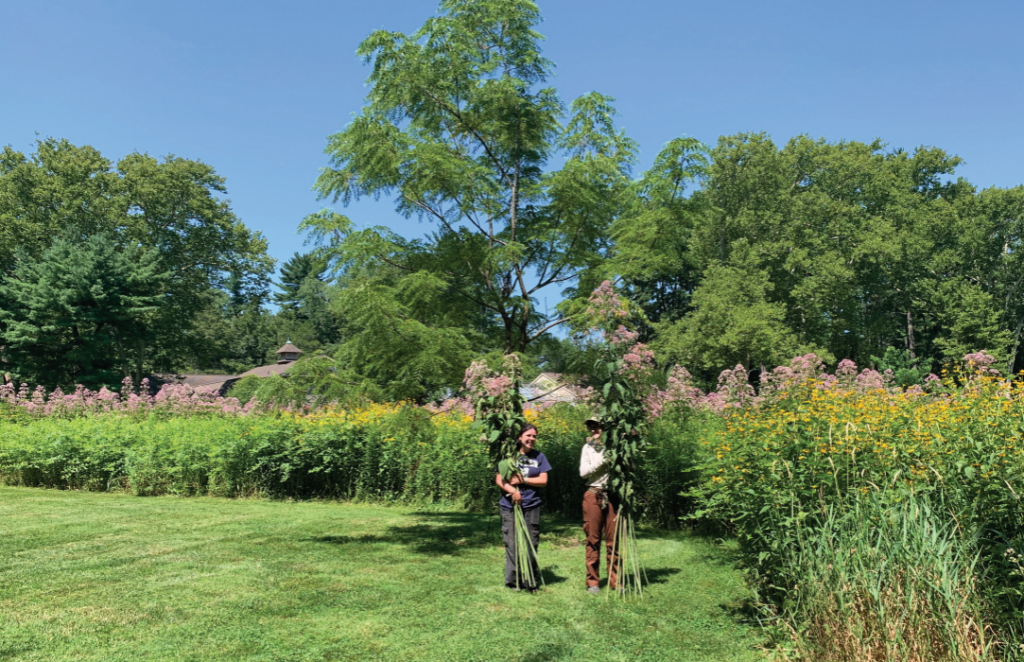
Kristen Ryan holds bundles of harvested Chasmanthium latifolium
 Why use natural décor
- It’s fun, and a great way to get creative!
- Using natural décor from your own garden is a different way to get to know your plants, and to celebrate the beauty of the seasons.
- This type of décor is much more environmentally friendly and sustainable than conventional materials.
- Increasingly, mass-produced décor is being made for use during a single season, and often out of seldom regulated (potentially toxic) materials shipped from overseas.
What plants to grow for decor
In general, we are looking for native plants that have:
- flowers that dry well
- seed heads that are beautiful, and are resistant to “shattering”
- interesting woody cones, caps, bark, and other bits
- Consider how you will manage your plants. Many of our best performers for décor are known to be aggressive in the garden. Deadheading them entirely for the sake of the garden is recommended for these species in most home gardens (at least, after your desired population has been established).
How to harvest
Deciding what to harvest is perhaps the hardest part. A sense of art and exploration is required here. Experiment with what works best for you, your garden, and your style.
- Timing
- Sometimes timing is VERY important, such as with Eupatorium, Solidago, and Vernonia species, which go to seed very quickly. Harvest these just as they are coming in to full bloom (or even in bud, if you like the look).
- Sterile cultivars, such as Eupatorium ‘JoJo’ have a longer bloom time and do not set seed at all. These can be harvested in a much larger window.
- Hydrangea flowers can be harvested while green (and/or pink) and they will dry a slightly paler color, or they can be harvested after they have matured to tan. It is not recommended to harvest them when they are in full bloom/white. The flowers have too much moisture and will shrivel and turn tan. Wait for them to color up as described.
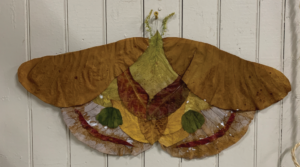 A note about glycerin: Fall leaves can be put in a glycerin bath for a few days to preserve them in a manner that is still compostable! (Most glue- and paint-based methods are plastic and not recommended for composting.) Leaf colors may shift in the bath, so play with timing and species.
- Aesthetic considerations
- Be mindful that you may want to leave flowers/seedheads for your enjoyment of the garden.
- You can harvest from less visible areas in order to reduce the visual impact in the garden. A few stems per plant in a home garden will not be missed.
- The chop
- Snip flowers with as long a stem (or longer) than you can picture ever using. It is easy to chop the stem off later, not so easy to add it back on.
- Try to make a cut that is a proper pruning cut, if working with woodies, or that is acceptable to look at, if working with perennials. A 6-24” chop may be useful to stem nesting bees if the stems are hollow.
- Remove (shuck) the foliage now, as it is easier to do when the plant is still pliable, and will help increase air flow for a faster and better drying time.
How to dry: the double-bundle method
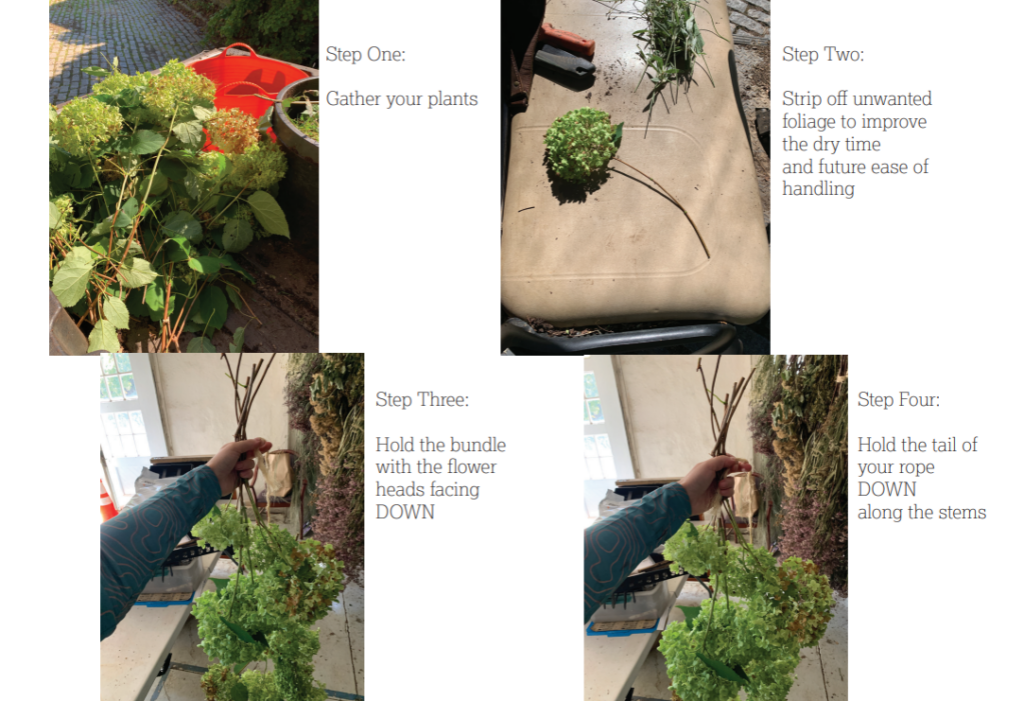
Remember, most things are down:
- Start with the bundle with the flower heads down.
- Then, place the tail of your rope down and hold it along the stems with your hand.
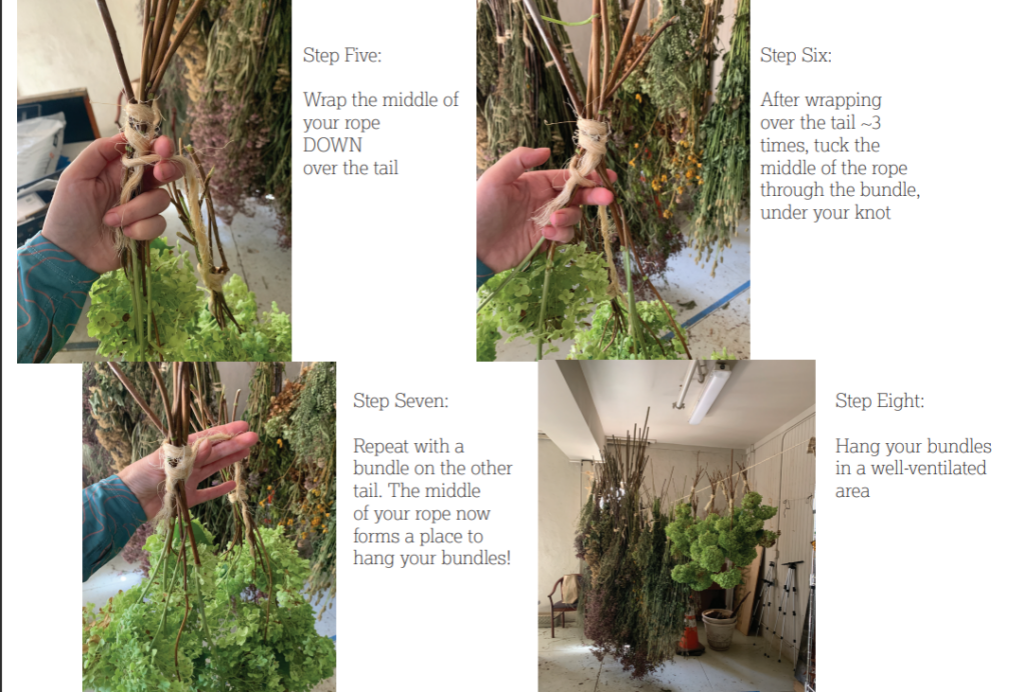
- Wrap the “middle” of your rope down over its tail, toward the flower heads.
- After wrapping the rope over itself about three times, split the stems in your bundle to tuck the “middle” of the rope through the stems.
- Repeat with a second bundle on the other tail of the rope.
- The middle of the rope will then hang easily over a pole, rope, or hook.
- Place your bundles in a cool dark place to dry… ideally, with good air circulation. Fans and de-humidifiers can work, but a north-facing porch with a breeze would be perfectly serviceable.
Wildlife considerations
- Many of the plants we harvest for décor are of interest to wildlife.
- Pollinators are interested in the nectar and pollen resources of the flowers. Mice, voles, and other birds and mammals like to eat the seeds
This means that:
- We should be mindful during harvesting to leave enough behind for the wildlife to eat in their natural habitats.
- And we should protect what we harvest from the critters that have a mind to steal our stash. Keep flowers hanging in an open area that is hard for mice to get to. If possible, move where you store the bundles each year.
next post


Eastern Hemlock: Redwood of the East
September 10, 2026
Learn about Pennsylvania’s impressive state tree.
