


American Sweetgum: As Old As the Dinosaurs
July 28, 2026
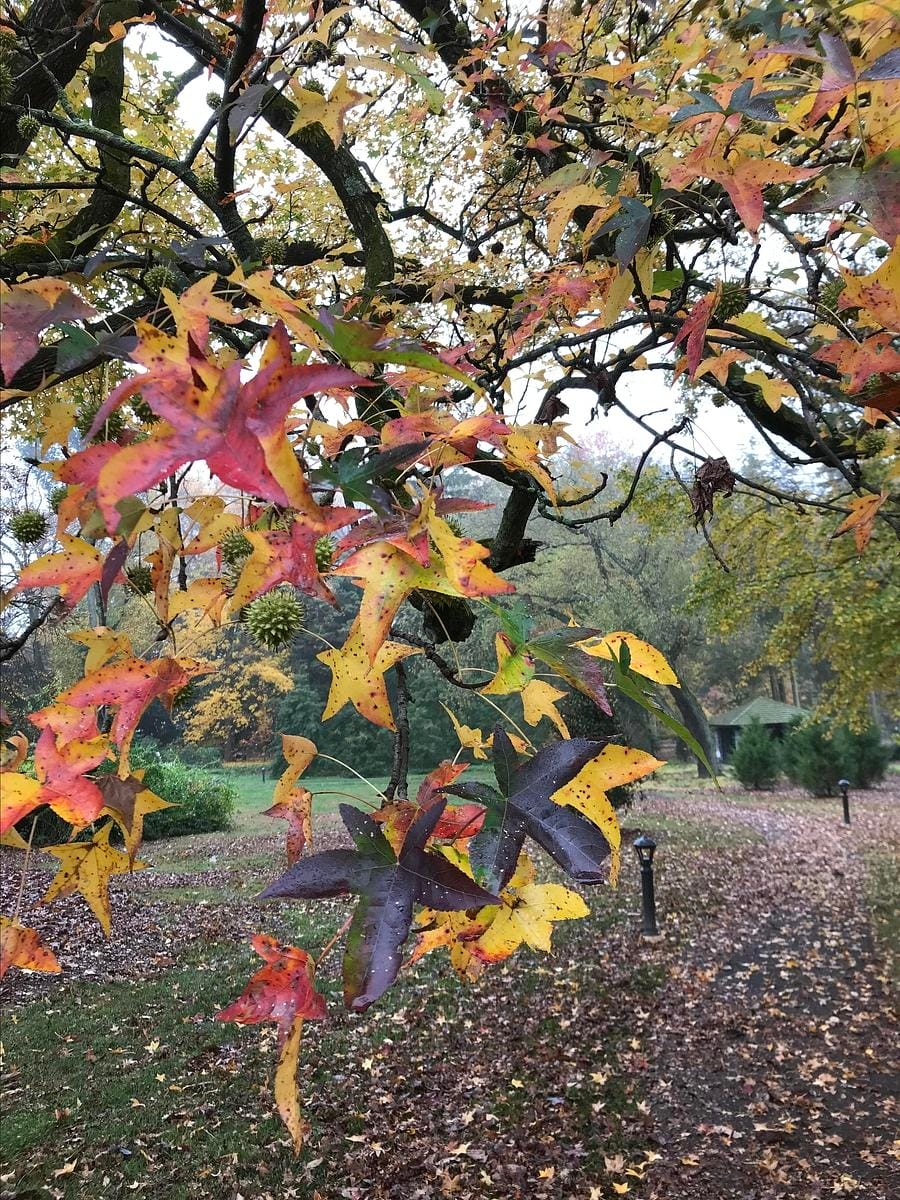

American sweetgum at Stoneleigh
by Anthony D. Fredericks, guest blogger
Prevalent throughout Natural Lands preserves, American sweetgums (Liquidambar styracifluaare) are some of North America’s most distinctive trees. They are native to warm temperate areas of eastern North America as well as tropical montane regions of Mexico and Central America. They are recognizable by the combination of their five-pointed star-shaped leaves (similar to maple leaves) and their hard, spiked fruits. The tree’s name comes from the Latin liquidus (“fluid”) and the Arabic ambar (“amber”), a reference to the fragrant terebinthine juice or gum which often seeps from the tree. Suffice it to say, sweetgums are distinctive in several commanding ways. Let’s take a look.
- Sweetgums have one of the oldest tree lineages in North America. Ancestors of today’s sweetgums grew during the age of dinosaurs; a long-term heritage that has survived massive climate shifts, continental drift, and multiple mass extinctions. Fossils dating back more than 90 million years have been found across the Northern Hemisphere, including in Greenland and Alaska.
- The first historical reference to the tree comes from the author and soldier, Don Bernal Diaz del Castillo, who accompanied Hernán Cortés to Mexico in 1519 and was witness to ceremonies between Cortez and the Aztec Emperor Montezuma, who both partook of a liquid amber extracted from a sweetgum tree.
- Sweetgums are known by several different names including sweet gum, alligatorwood, American sweetgum, American storax, gum tree, redgum, and star-leaved gum.
- When the bark is “wounded,” the tree exudes a fragrant resin known as storax. Native Americans and early European settlers used this resin as chewing gum, incense, perfumes, folk medicines (for dysentery and diarrhea), and flavorings.
- Sweetgums are known for their elegant, symmetrical shape. Young trees naturally grow into a neat pyramidal form—making them attractive landscape trees before their crowns broaden with age.
-
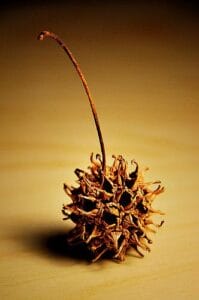
American sweetgum seed pod
Mature sweetgums reach average heights of 60 to 80 feet; although forest-grown specimens may grow 120 to 150 feet in height as they reach for the light. The tallest known sweetgum tree is 167 feet high. Sweetgums also live for approximately 200 to 300 years. Under favorable conditions, some trees can live for 400 years or more.
- Over the years, sweetgum wood has been used to make furniture, veneers, cabinets, flooring, barrels, boxes, crates, and even plywood. As such, it is often marketed as “satin walnut.”
- Sweetgum wood changes dramatically with age. Young trees have relatively smooth bark. As they mature, deep furrows and distinctive corky ridges develop, giving older trees a crumpled and chiseled appearance (thus the epithet “alligatorwood”).
- Sweetgums are a haven for various wildlife. They provide food and shelter for numerous birds, squirrels, chipmunks, and insects. Several species of moths and butterflies use the tree as a host plant for their caterpillars.
- Sweetgums are one of the last deciduous trees to leaf out in the spring and often one of the last to lose its leaves. The trees produce some of the most spectacular fall color displays. A single sweetgum can display shades of yellow, orange, scarlet, crimson, burgundy, and purple… all at the same time.
- Although many people complain about the hard, spiky fruits littering lawns and sidewalks, each of those “gumballs” is not a single fruit but a cluster containing dozens of tiny seed capsules. Birds such as Goldfinch, Purple Finch, sparrows, Mourning Dove, and Wild Turkey feed on those seeds in both fall and winter.
Anthony D. Fredericks (www.anthonydfredericks.com) is the best-selling author of numerous natural history books including The Healing Wisdom of the Forest: Timeless Lessons of Renewal, Tranquility, and Joy. He lives in York, PA.
next post


can pollinator gardens make a difference?
July 23, 2026
By Tanya Dapkey, Natural Lands NextGen Council member As biodiversity declines and pollinators face growing pressures from habitat loss, pesticides, invasive species, and climate change, […]
continue reading