


Crow’s Nest: What A Long Strange Spring It’s Been
May 1, 2026


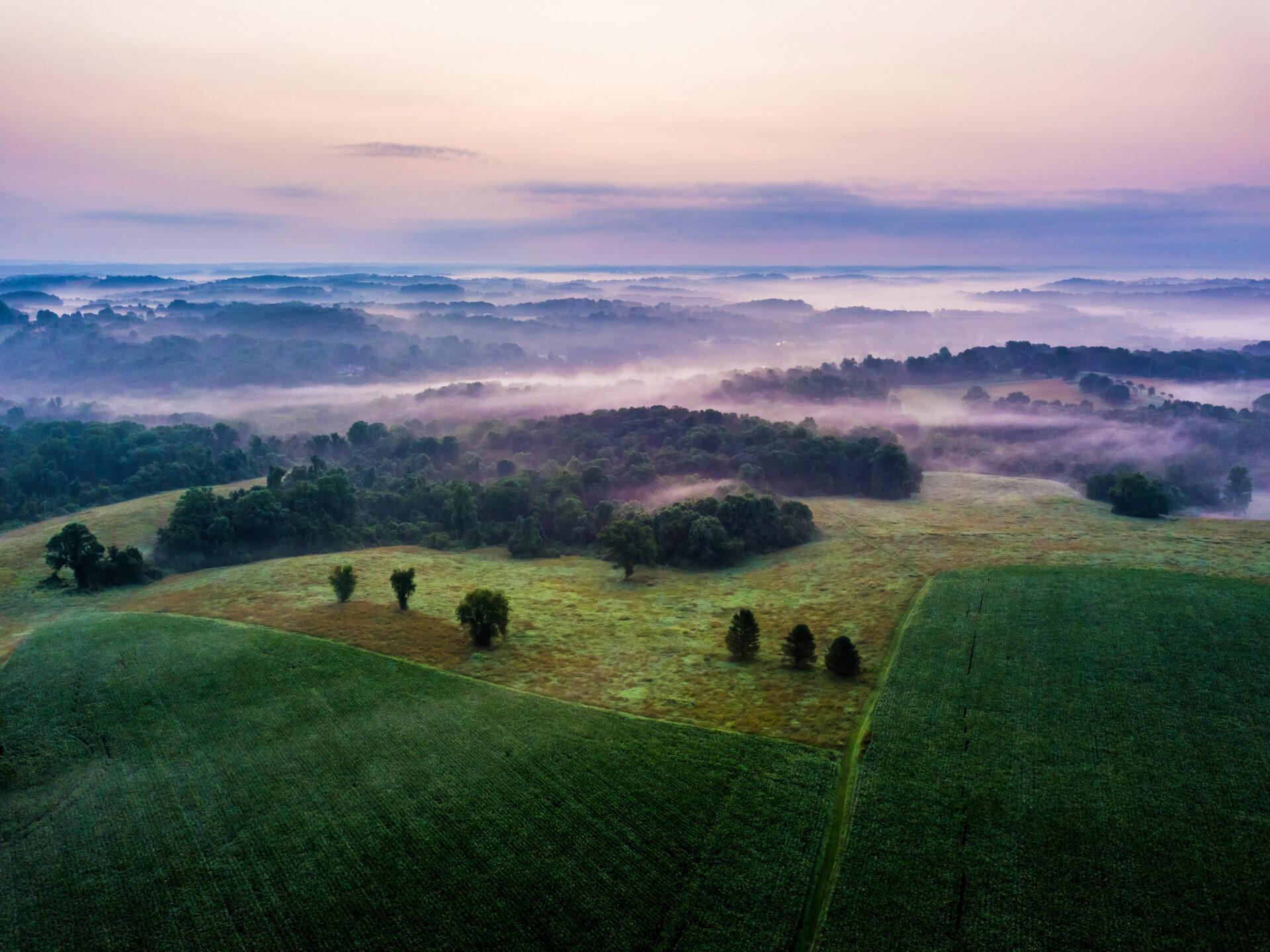
Aerial view of forested valley in spring with some trees not leafing out yet
By Daniel Barringer, Preserve Manager.
Yes, I know it’s only half over. But strange!
We had a hard frost in mid-April. That’s not remarkable; our last “possible” frost date here is May 15—two more weeks from now, and we’ve had them even later than mid-May a couple times. What was unusual—and damaging to so many plants—is that the frost was preceded by a few days at close to 90 degrees. Unfortunately a lot of trees had leafed out; their very small leaves were still susceptible to the cold and have been killed. So now, a few weeks later, the landscape partly looks like spring—green grass and some species fully leafed out—while other trees are bare like it’s still winter. You can see the difference even as you pull in our parking lot.
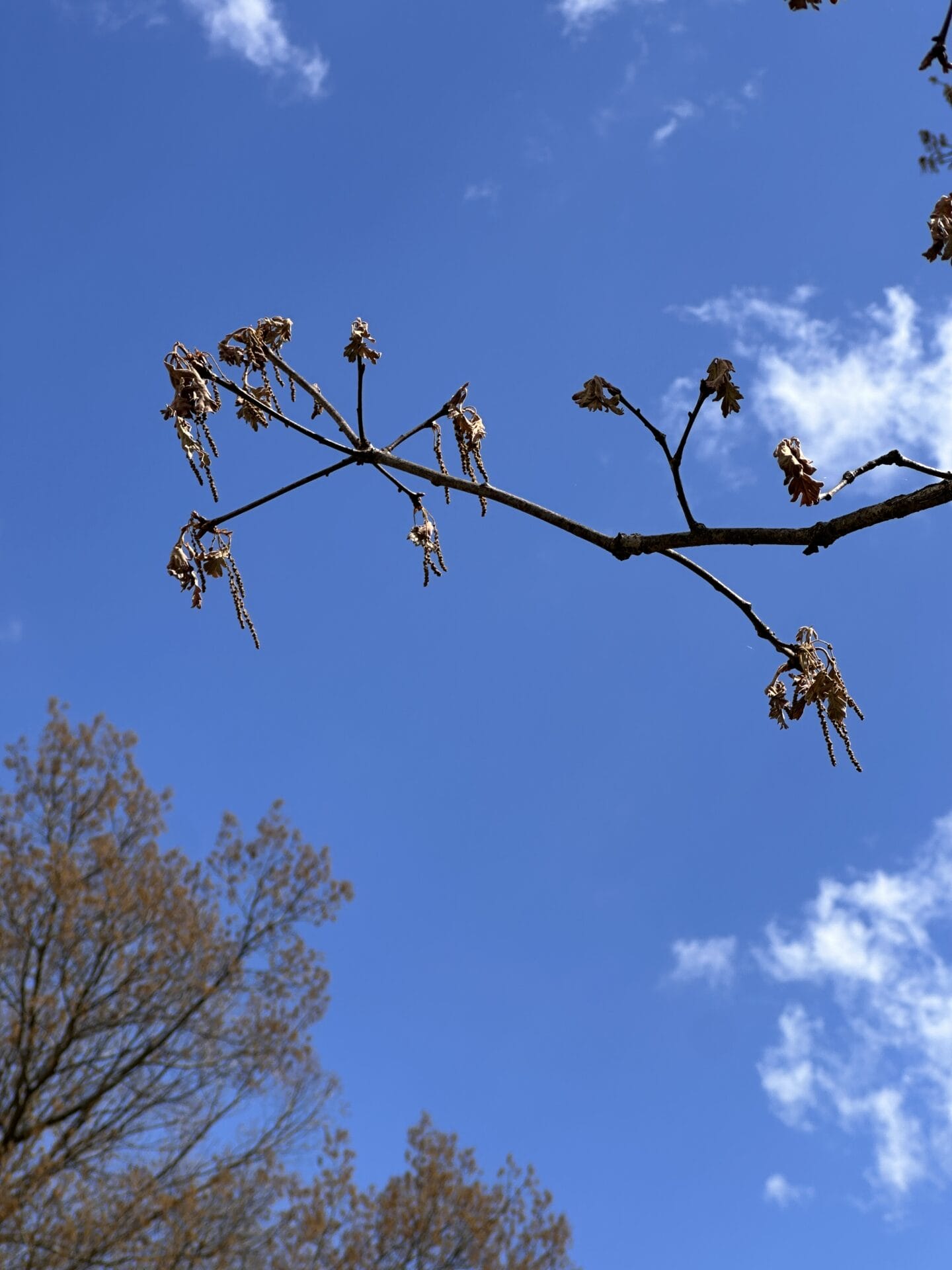
Photo: Daniel Barringer
Cold air must have pooled in the low-lying valley (in which most of Crow’s Nest Preserve is located) because the oaks on the surrounding ridges appear relatively unscathed while many in the valley entirely lack leaves, or have shriveled leaves and flowers (photo above). The lead photo, an aerial view of the woods surrounding French Creek, shows plenty of pin oak minus leaves while other species are already green. Below, a shag-bark hickory with shriveled leaves.
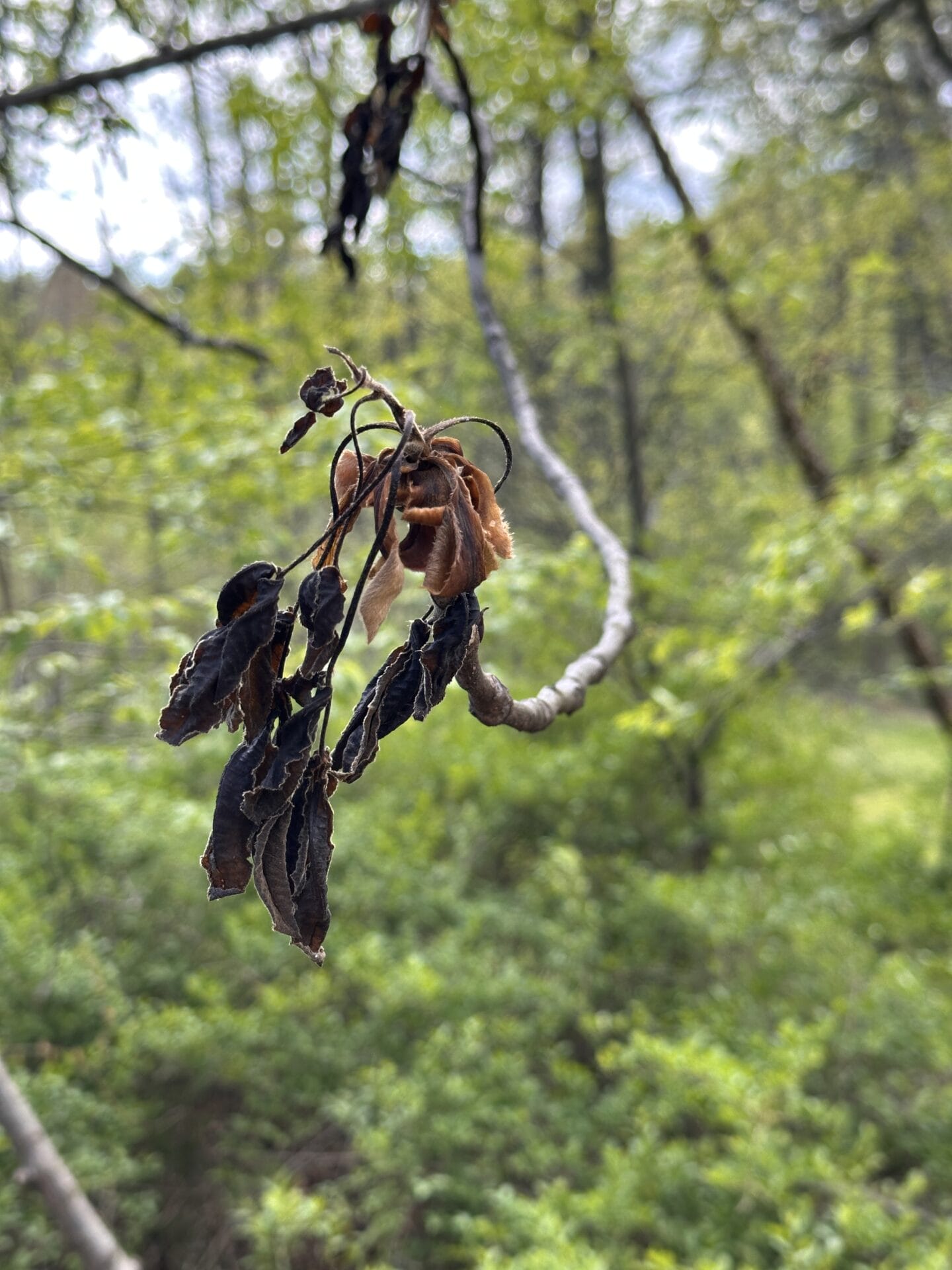
Photo: Daniel Barringer
Compare the photo above with another hickory nearby that has normal growth (below):
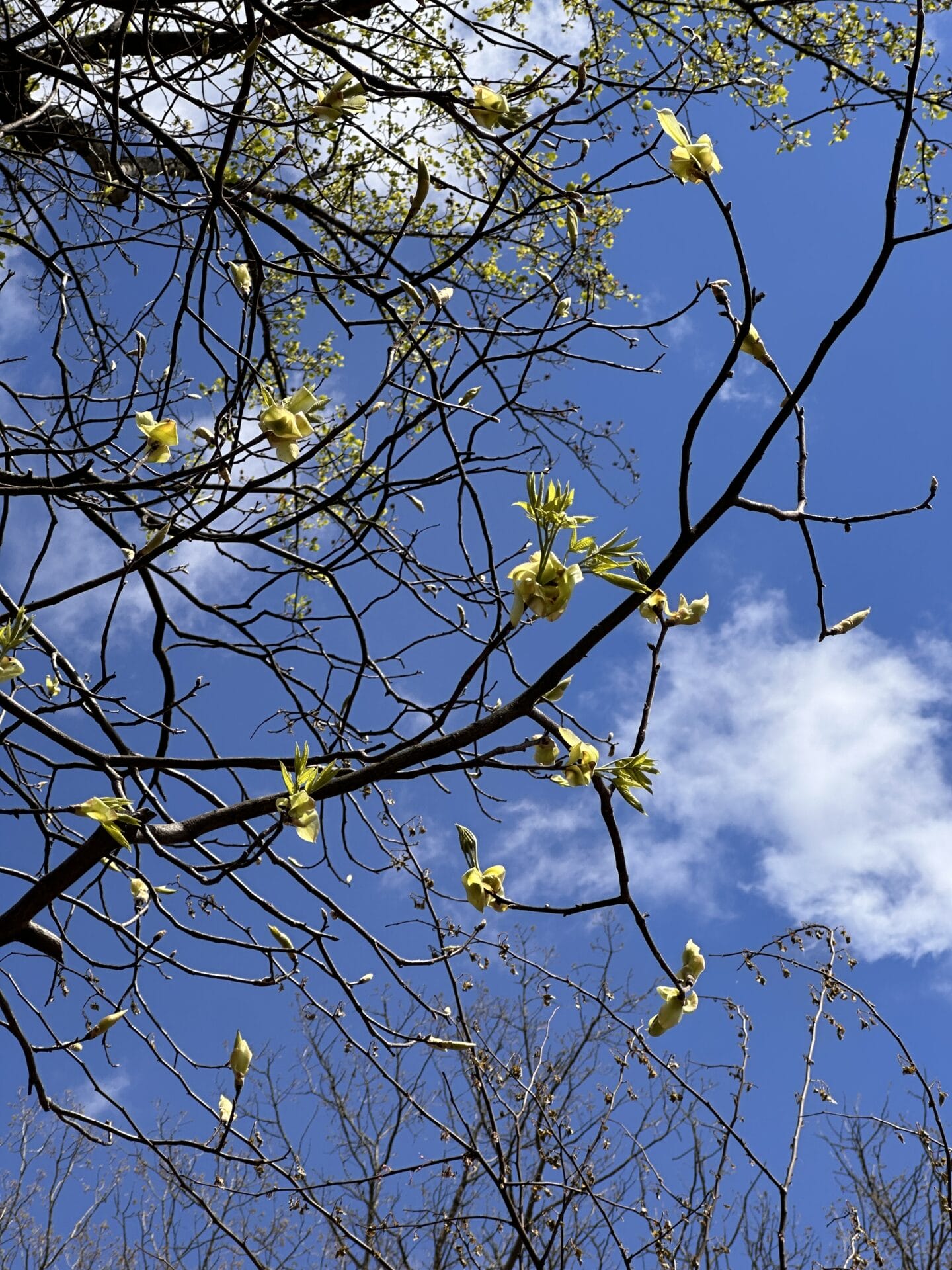
Photo: Daniel Barringer
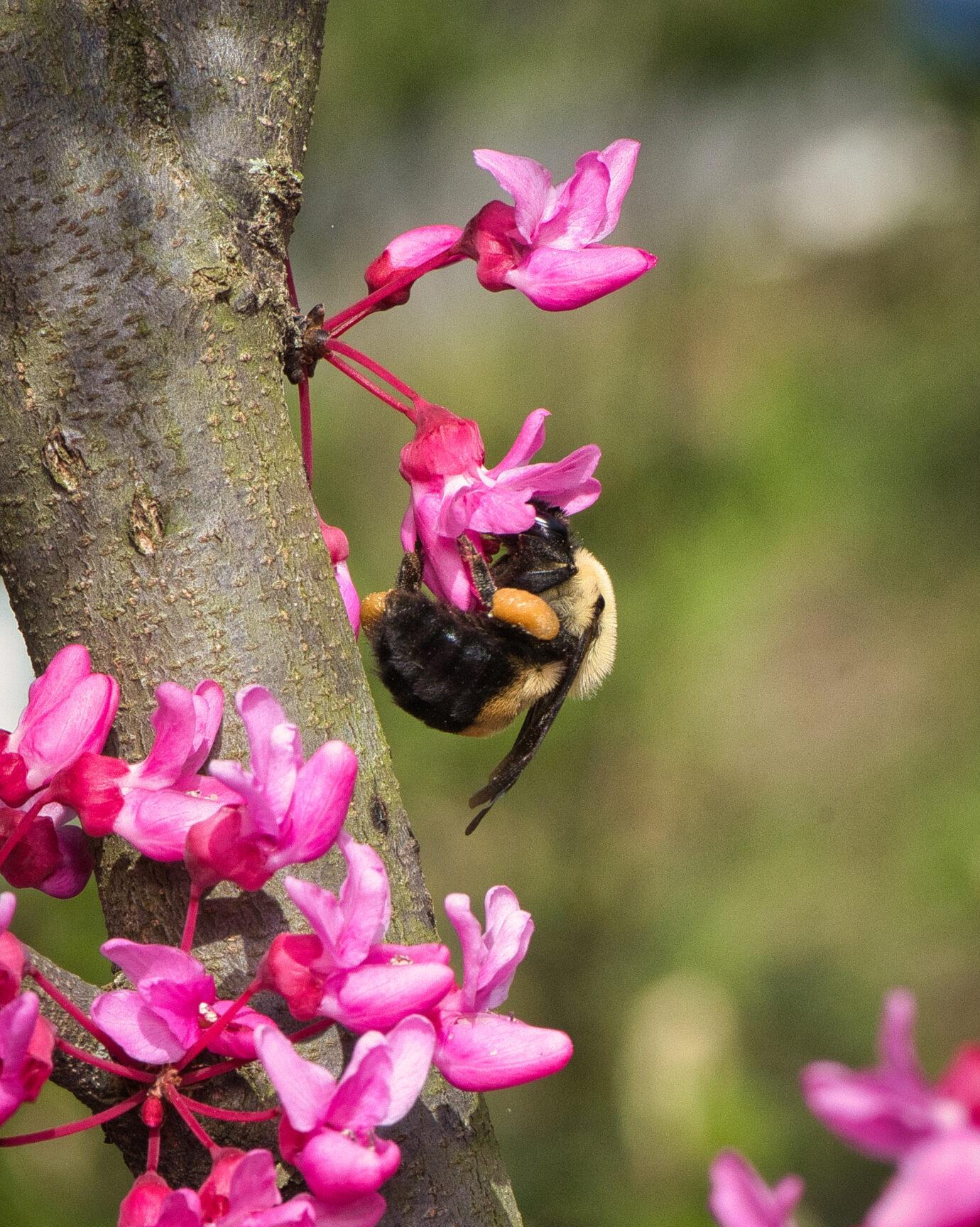
In addition to some oaks and hickories, yellowwood (Cladrastis kentukea, photo below), black gum (Nyssa sylvatica), sweet gum (Liquidambar styraciflua), and hackberry (Celtis occidentals) also had their leaves killed. Redbud (Cercis canadensis) flowered beautifully but now the leaves look like they were damaged. Black walnuts and ash (we still have a few) are always later to leaf out, and though they might have been affected, it’s difficult to tell. Some tuliptrees (Liriodendron tulipifera) look a little thin; others look ok.
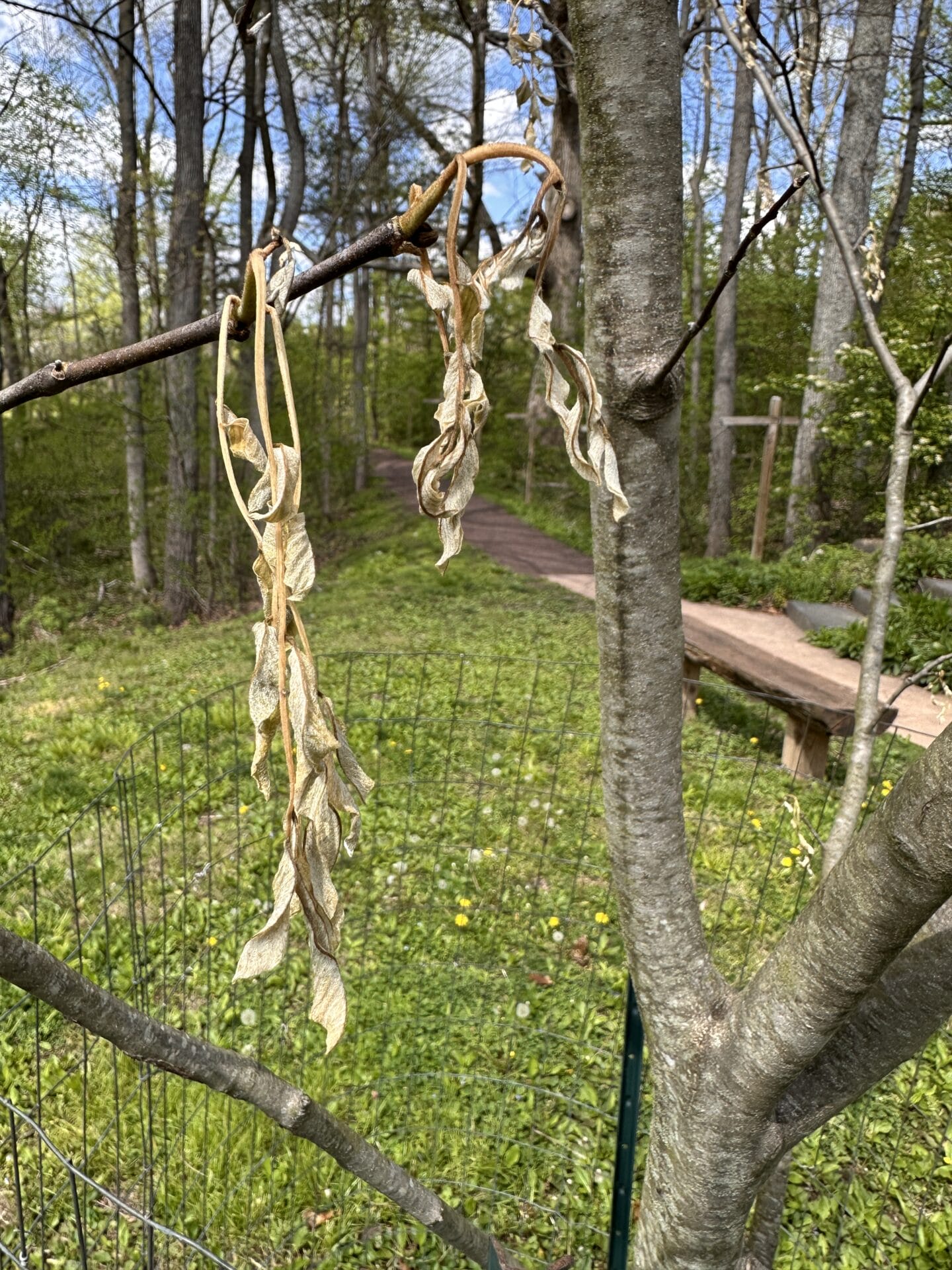
Photo: Daniel Barringer
Spicebush (Lindera benzoin) took a hit but new leaves have already greened up behind the dead ones (see below):
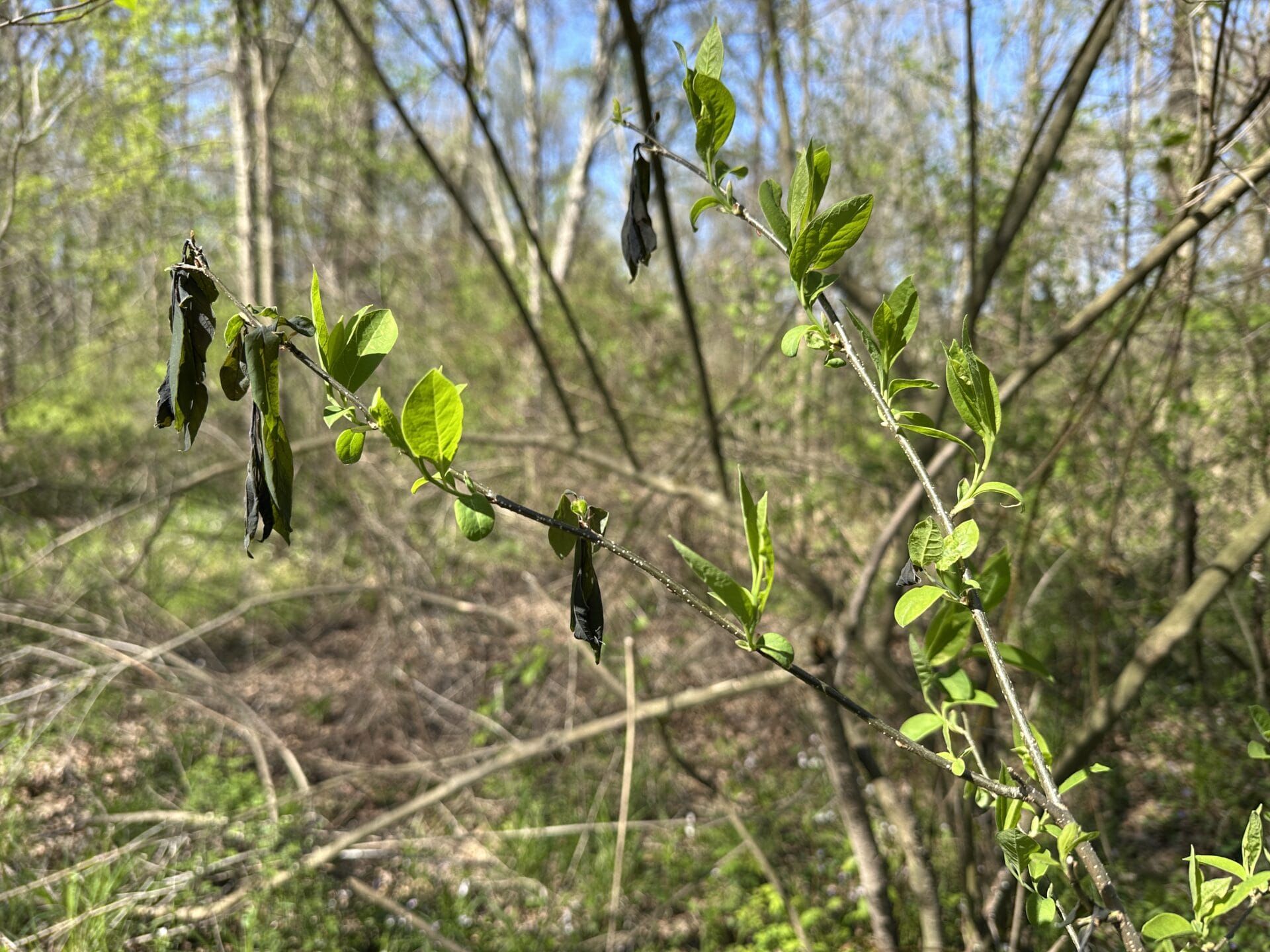
Photo: Daniel Barringer
Things that leafed out fine include red maple (Acer rubrum), ironwood/American hornbeam (Carpinus caroliniana), and American dogwood (Cornus florida). American beech (Fagus grandiflora) looks ok, except that the leaves in the last couple years have already been appearing discolored and distorted by beech leaf disease and there’s a fair chance that many of these will be defoliated by summer. Blackhaw (Viburnum prunifolium) is flowering now and the leaves look great—those leaves are a little leathery and that seems to help.
Interestingly, a couple species that we understand might be negatively affected by the heat stress of summers under a changing climate (we’re near the southern end of their range) have full leaves: black cherry (Prunus serotina) and sugar maple (Acer saccharum).
I didn’t notice any of our typical invasive plants affected by the frost, except for Asiatic bittersweet vine (Celastris orbiculatus). I don’t see any changes to evergreen conifers like white pine or red cedar, but that doesn’t mean they weren’t affected.
Among herbaceous plants, of course sensitive fern (Onoclea sensibilis) was knocked back—that’s why it’s called sensitive fern. That will return after a bit of time. We’ve had a very good year for spring ephemeral wildflowers, some spectacular displays of anemone, bishop’s hat, sessile bellwort, hepatica, bloodroot, spring beauty, mayapple, nodding trillium, and Dutchman’s breeches. My sense is that although they experienced the same conditions, their leaves were sufficiently formed and hardened off by the time of the cold snap. Now we also have blooms of Solomon’s seal, showy orchis, and Jack-in-the-pulpit to enjoy.
I worry about the stress trees will experience having to form a second set of leaves, especially given the drought conditions we are also experiencing this spring, and following a winter of notably low temperatures. This will be one of those years with narrow growth rings, I expect. Right now things look a little grim, but we can hope that everything will recover in a month. A lesson I take away from this is that we should try to have as much species diversity in our forests as we can.
next post


spicebush - the scent of nature
April 28, 2026
By Anthony D. Fredericks, guest blogger Spicebush (Lindera benzoin) is known by several names including common spicebush, northern spicebush, wild allspice, or Benjamin bush. Extant […]
continue reading