



spicebush – the scent of nature
April 28, 2026


spicebush – Lindera benzoin
By Anthony D. Fredericks, guest blogger
Spicebush (Lindera benzoin) is known by several names including common spicebush, northern spicebush, wild allspice, or Benjamin bush. Extant throughout the eastern U.S. (including at Natural Lands’ nature preserves) its spicy, citrusy smell courses through its preferred habitat of moist woodlands, stream banks, and the understory of deciduous forests. Often growing to heights of six to twelve feet, spicebush adds color and fragrance to any environment. It also has several distinguishing characteristics that identify it as a most fascinating plant. Let’s take a look:
-
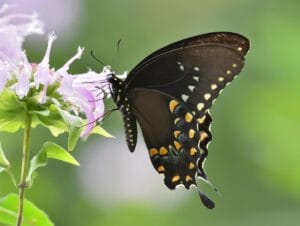
Spicebush Swallowtail butterfly, photo by Bill Moses
Native Americans used spicebush bark to create a medicinal tea as well as a mild stimulant. When dried and crushed, the bark can also be used as a substitute for cinnamon. Early settlers often used spicebush to flavor their food.
- Its name comes from the fact that when the leaves or twigs are crushed, they release a warm, citrusy-spicy scent.
- Spicebush is a favorite food plant for the Spicebush Swallowtail butterfly (Papilio troilus) and the Promethea silk moth (Callosamia promethea). The caterpillars feed on the plant’s leaves. Other animals, such as eastern cottontail rabbits, opossums, and occasionally white-tailed deer, feed on the leaves, twigs, and berries.
- In the early spring, yellow flowers begin to appear in showy clusters before the leaves begin to grow. This makes spicebush an important early nectar source for pollinators.
- The ripe fruit is a berry-like drupe favored by more than twenty varieties of birds, especially Wood Thrush. Although strong-tasting, the berries are also edible for humans.
-
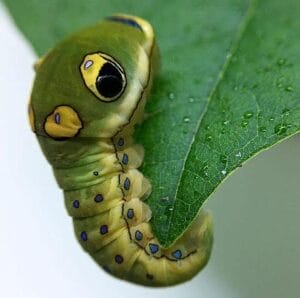
Spicebush Swallowtail caterpillar, photo by Mike Coll
Spicebush is a dioecious plant; it has separate male and female plants. As such, male and female flowers grow on separate plants and it is the female plant that produces the small, shiny fruits in late summer.
- In a study of Lindera benzoin published in 1994, the researchers noted that the population tends to have more males than females. They surmised that this was due to the heavier reproductive costs on females.
- A good way to identify spicebush plants in the wild is to look for caterpillars of the Spicebush Swallowtail. These critters can be identified by their bright green color with big fake “eye spots.” Often, they will be resting on folded leaves.
Anthony D. Fredericks (www.anthonydfredericks.com) is the best-selling author of The Healing Wisdom of the Forest: Timeless Lessons of Renewal, Tranquility, and Joy. He lives in York, PA.
next post


insects are emerging
April 24, 2026
Welcome to spring at Hildacy Preserve, when the bees, flies, and other insects begin to emerge.
