


Tulip Tree – The Tree of Many Names
March 30, 2026


Tulip Poplar (Liriodendron tulipifera ‘Arnold’)
by Anthony D. Fredericks, guest blogger
It’s been celebrated in literature (The Legend of Sleepy Hollow), planted by George Washington at Mount Vernon, and is the state tree of Indiana, Kentucky, and Tennessee. So, too, is it extant throughout Natural Lands’ properties. Popularly known as the tulip poplar (Liriodendron tulipifera), it also goes by several other names, including tulip tree, American tulip tree, tulipwood, whitewood, fiddletree, lynn-tree, hickory-poplar, canoewood, and yellow-poplar. Common throughout Pennsylvania and New Jersey, its range extends from Southern Ontario, west to Illinois, east to Massachusetts, and south to Florida and Louisiana.
- Tulip poplars are one of our most impressive trees. Despite its name(s), it isn’t a true poplar at all. It belongs to the Magnolliaceae family, making it less a tulip and more a magnolia. It is also distinguished by a plethora of features that are nothing short of amazing.
- In the Cretaceous age (143.1 to 66 million years ago), the genus (Liriodendron) was represented by several species, and was widely distributed over North America and Europe. Its remains are also found in Tertiary rocks (volcanic rocks formed during the Tertiary period from approximately 66 million to 2.6 million years ago).
- Tulip trees were used by Native Americans to make large dugout canoes as well as other construction projects.
- Tulip trees are one of the tallest trees in eastern North America. A tree just 15 years old may reach a height of about 40 feet. At maturity, they are normally 70 to100 feet in height. However, one specimen in North Carolina—The Fork Ridge Tulip Tree—has been measured at 191 feet, 10 inches, making it the tallest tulip tree ever.
- Tulip trees grow quickly, often two feet or more per year in good conditions: adequate supplies of water, fertile and well-drained soil, full sun, and plenty of space. Their average life span is between 200 to 250 years; however, individual trees have been known to live for up to 500 years.
- They have numerous benefits for wildlife. These include seeds for birds and small mammals, leaves eaten by certain species of caterpillars (including the Eastern Tiger Swallowtail butterfly), and multiple branches ideal as nesting sites for birds and squirrels.
- Their characteristic leaves are easy to recognize. Each leaf has four lobes and are heart-shaped, truncate, or slightly wedge-shaped at the base. The alternate leaves are simple, pinnately veined, and measure between five and six inches long and wide.
- In late spring, tulip trees produce greenish-yellow flowers with orange bands that resemble tulips (hence the name). These blooms are often high in the canopy, so many people don’t notice them.
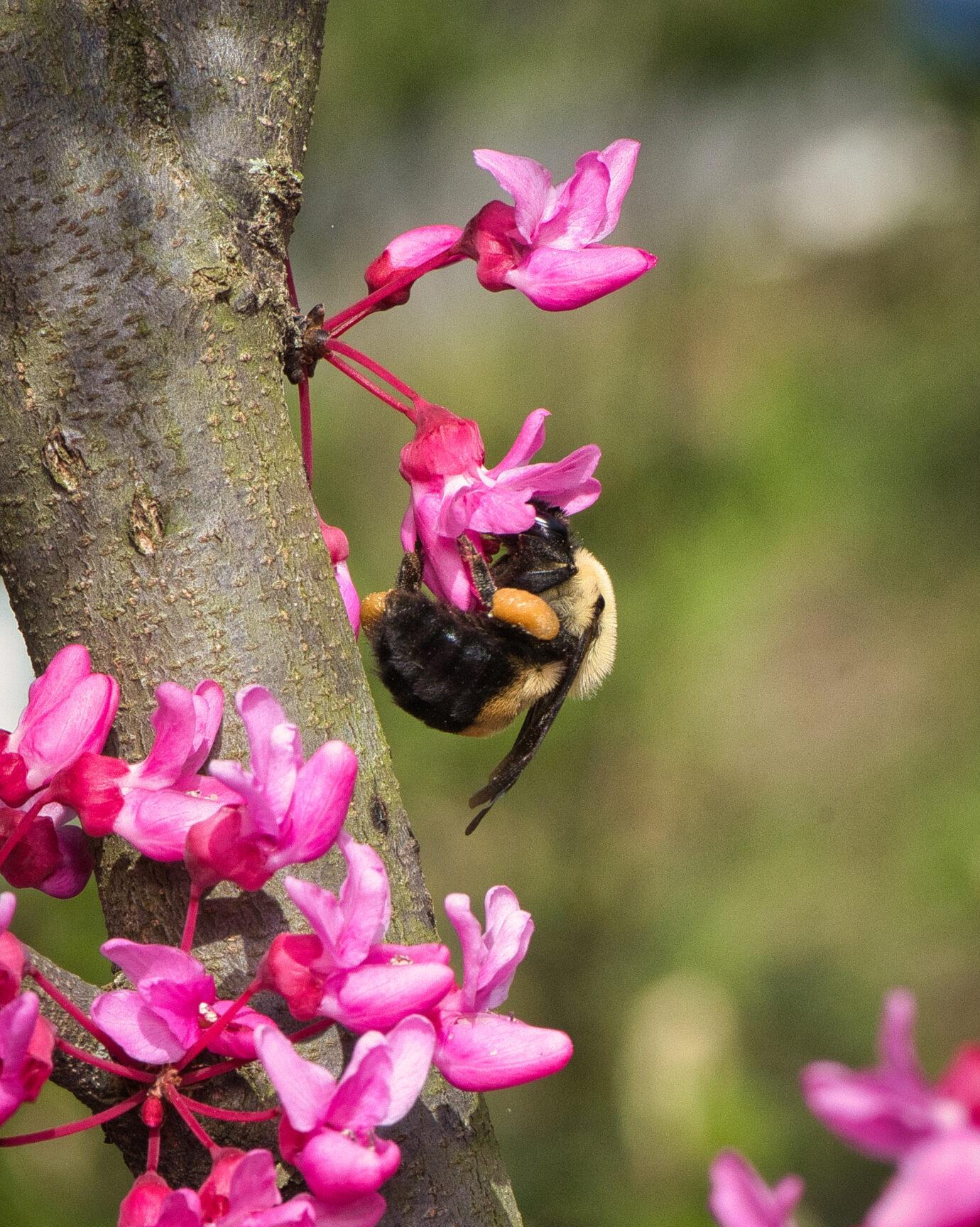
- The flowers produce abundant nectar, making the tree highly attractive to bees. Tulip poplar honey is dark, rich, and highly prized by beekeepers.
Anthony D. Fredericks (www.anthonydfredericks.com) is the award-winning author of the children’s book Tall Tall Tree [featuring redwoods]. He lives in York, PA.
next post


skunk cabbage - hot and stinky
March 18, 2026
by Anthony D. Fredericks, guest blogger It’s one of the first plants to bloom in late winter or early spring—one that generates its own heat, […]
continue reading