


Sssensational Snakes of PA
February 24, 2026


Eastern Milk Snake at Stroud Preserve
By Tianna Godsey, events coordinator
A remarkable 51 percent of Americans report a fear of snakes—known as ophidiophobia—even though most species native to Pennsylvania are harmless to humans. Here are some interesting facts about these ecologically significant serpents.
- PA is home to 21 species of snakes. Those in the eastern part of the state that are commonly spotted are:
- Eastern Garter Snake, which can have varied varied skin patterns. They are ovoviviparous—meaning they produce eggs that are retained within the mother’s body until they are ready to hatch.
- Black Rat Snake, which can grow up to seven feet long with shiny skin. They are excellent swimmers and climbers. Juveniles are patterned and often killed for resembling venomous copperheads.
- Black Racer, a less commonly spotted species that is sometimes mistaken for the black rat snake. Their skin is usually matte black (not shiny).
- Northern Water Snake, which each fish and amphibians. They swim underwater and are often mistaken for copperheads or cottonmouths.
- Eastern Hognose Snake, which play dead when threatened (thanatosis).
- Ring-necked Snake, a small snake that is nocturnal. They spend time under rocks and logs hunting earthworms.
- Eastern Kingsnake, often eats other snakes, including venomous species as they are immune to other snakes’ venom.
- Eastern Milk Snake, which is often mistaken for the venomous coral snake.
- Queen Snake, a semi-aquatic species that needs clean, moving water. They use their tongues to “smell” prey, their favorite being molted crayfish.
- Venom requires a lot of energy to produce, which is why snakes will rarely bite humans—we are not their prey. There are only three venomous snakes in PA, and even fewer that are poisonous to humans.
- Timber Rattlesnake, which is the only rattlesnake in northeastern U.S. They have a mild disposition but high venom yield for their size and weight. Their color ranges from yellow to gray to brown, often featuring dark bands or chevrons along their backs.
- Massasauga, which was named for “great river mouth” in Chippewa. Sadly, this species in endangered in PA. They are smaller, about 18 to 30 inches in length. Their rattles sound like a bunch of clipped fingernails (made up of keratin). They are typically gray or light-brown color with large, light-edged blotches on their back and smaller blotches on their sides.
- Eastern Copperhead, which doesn’t rattle a warning. They often freeze when startled. Their skin is a coppery or reddish-brown base color with distinctive, dark-brown, hourglass-shaped crossbands.
-
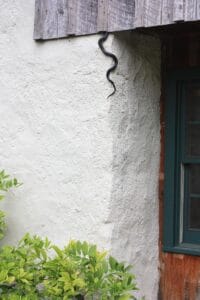
Black rat snake, photo by Dan Barringer
Snakes are reptiles, unique from amphibians in many ways: they never have gills; have dry, scaly skin; and their eggs are leather-like.
- Many snake species give birth to live young.
- Snakes are one of the true hibernators in our region, often in a “cuddle puddle” with others. Directly after hibernation, they form a “mating ball” to welcome the spring.
- Snakeskin is smooth to the touch, not slimy, and their scales are dry, soft, and often layered.
- Snakes can be a source for salmonella infections, as they naturally carry it in their gut (as many reptiles do). Don’t handle wildlife and, if you do, wash your hands afterwards.
- All snakes have teeth but only some species have fangs.
- While all snakes that have fangs are venomous, not all venom is toxic to humans.
- All snakes can swim. The natural movement of their bodies and their ‘S’ shape allow them to move effortlessly through water.
- All snakes are ectothermic, meaning they rely on external sources of heat to regulate their body temperature. That’s why you’ll often find them sunning themselves on rocks, from which they absorb warmth.
- In mythology and history, snakes are symbols of temptation, doom, and villainy.
- Death from snake bite in the U.S. is extremely rare—usually fewer than seven people per year.
next post


Preserving 60 Acres of Forest in Hopewell Big Woods
January 26, 2026
MEDIA, Pa., January 26, 2025 – Natural Lands announced today the preservation of a nearly 60-acre property in Union Township, Berks County, that was transferred […]
continue reading