Epizootic Hemorrhagic Disease In Deer
December 17, 2024
This article is from the naturalists and conservation professionals at Natural Lands, the Greater Philadelphia region’s oldest and largest land conservation organization, working to protect open space and connect people to nature since 1953.
By Daniel Barringer, Preserve Manager.
Chester County last had an outbreak of Epizootic Hemorrhagic Disease (EHD) in deer in 2018. In 2024 there were also a somewhat unusual number of dead deer found in the area. Some of those have been tested and the Pennsylvania Game Commission has determined that a few of them had EHD.
EHD is caused by a virus that is spread by midges that are not native to Pennsylvania but blow in occasionally from the south. Outbreaks don’t normally happen often enough here for deer that exhibit some resistance to pass that trait on to subsequent generations, so this disease has a high mortality rate for deer in our area.
The midges breed in mud so the disease is sometimes worst in dry years, when deer congregate near the little remaining surface water and are exposed to them in the diminishing mud flats. This year was about as dry as any in memory. There is no vaccine that will inoculate deer. There is no cure once infected, though some exposed deer will survive. The disease ran its course until the vector—the midges—were killed by frost.
The extreme outbreak in 2018 resulted in much smaller deer populations and this was noticeable in the reduced amount of browse in the forest. There was distinctly more forest regeneration in the few years after that until deer numbers gradually rose again.
Humans are reportedly not affected by the virus, though people who hunt should avoid exposure to outwardly sick deer as there could be secondary pathogens to which they could be exposed. Deer exhibit symptoms within seven days of exposure, according to the PA Game Commission, and succumb 8 to 36 hours after that.
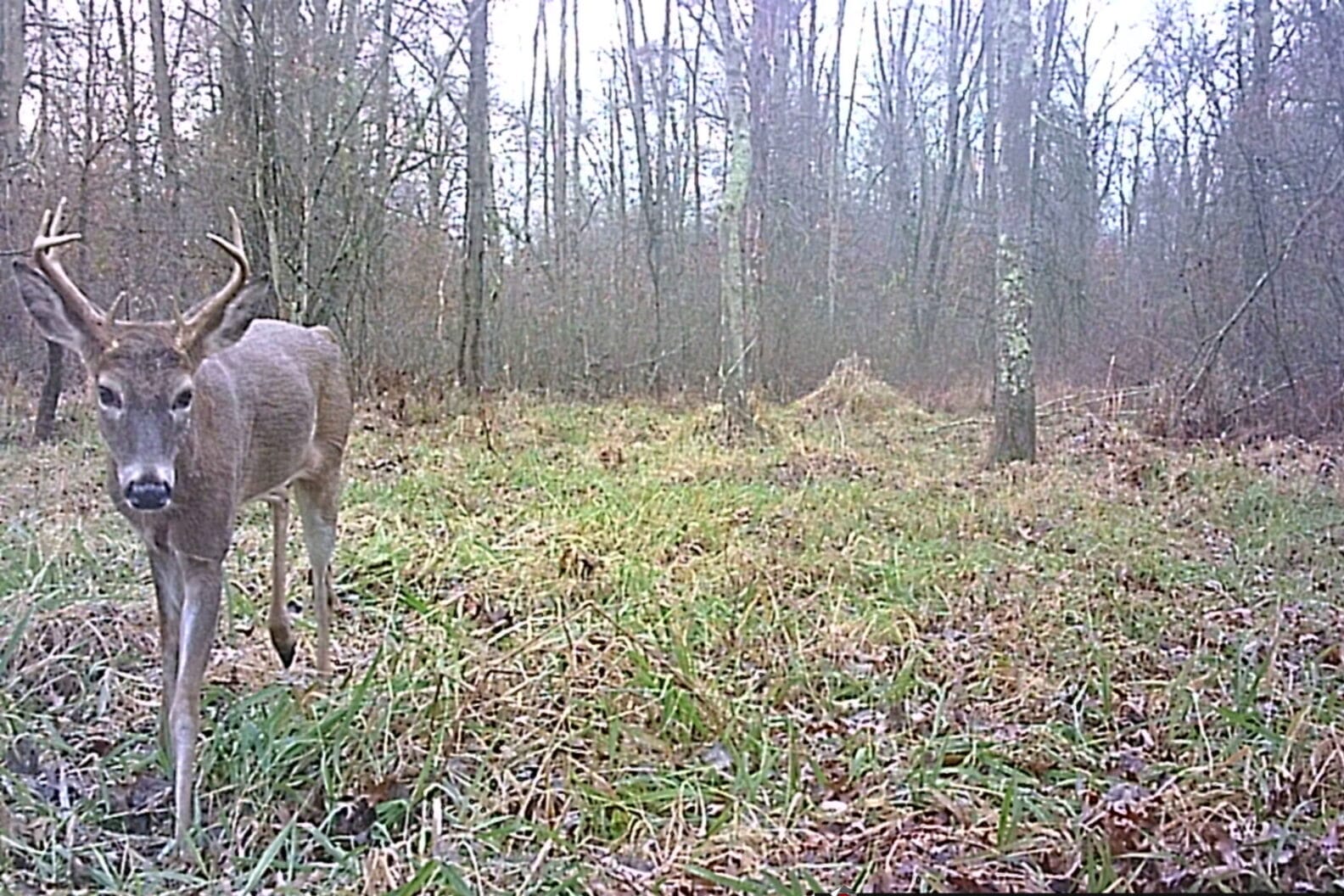
This year was not like 2018, but until frost we were monitoring deer populations around Crow’s Nest Preserve and requesting dead ones be tested. (Note that the deer in the photo above is just one that walked past our trail camera; there’s nothing to suggest it was a deer with EHD.)
Explore the Natural World with Natural Lands
Since 1953, Natural Lands has worked to save open space, care for nature, and connect people to the outdoors. As the Greater Philadelphia region’s oldest and largest land conservation organization, Natural Lands has preserved 140,000 acres, including a network of 40+ nature preserves and one public garden totaling 24,000 acres. Today, 5 million people live within five miles of land under Natural Lands’ permanent protection.
Get outside and explore.
Natural Lands’ nature preserves are free and open to the public, with more than 120 miles of trails to discover. Looking for a place to start? Visit a Natural Lands preserve or explore Stoneleigh: a natural garden, open Tuesday through Sunday from 10 AM to 5 PM, with free admission.
Keep nature thriving.
Natural Lands is a member-supported nonprofit, and your support helps protect important landscapes, care for wildlife habitat, and keep natural spaces accessible. Become a member or make a gift, and learn more about the organization’s conservation impact here.
next post
Down. But Not Out.
December 10, 2024
Claudia Winters, Natural Lands’ assistant preserve manager for Sadsbury, Willisbrook, and Green Hills Preserves, is a self-professed birder. But really, she is a wildlifer. She […]
continue reading