


eastern redbuds: harbingers of spring
February 26, 2026
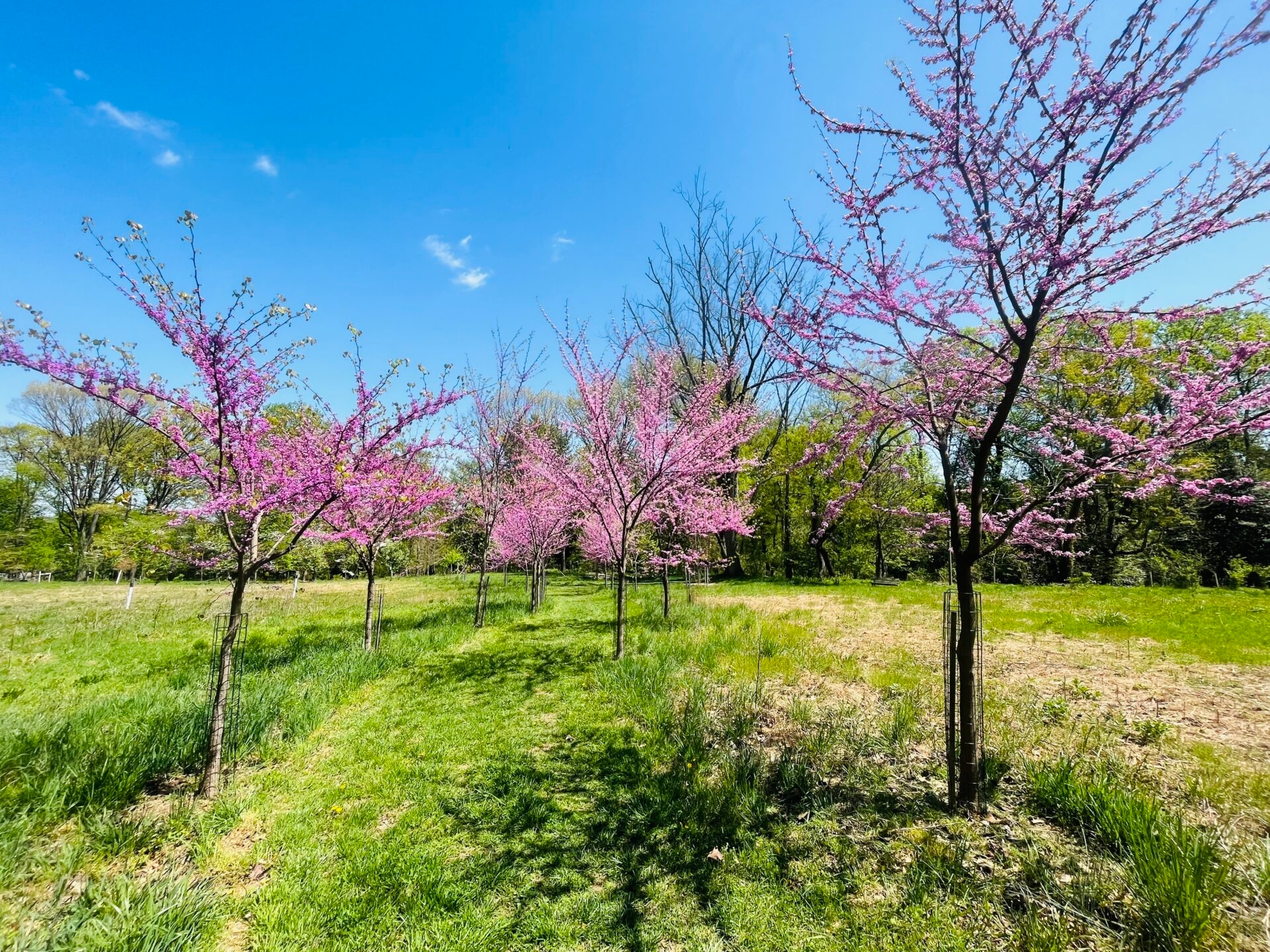

Bright, magenta blooms on eastern redbud trees in spring at Saunders Woods Preserve.
by Anthony D. Fredericks, guest blogger
You know winter is over in southeastern Pennsylvania when Eastern Redbuds (Cercis canadensis) blossom out in wondrous shades of pink, magenta, lavender, and purple. A new season is on the way! Whether they crowd a local highway, festoon your favorite nature preserve or public garden, or are sprinkled throughout a forested hillside, their springtime beauty always elicits a pantheon of OHHHHs and AHHHHs from spectators. They are arboreal exemplars of life, wonder, and the ever-occurring miracles of nature.
Although visual spectacles, they are also celebrated for their growth, influence, and fascinating facts. Let’s take a look.
- The Eastern Redbud is the state tree of Oklahoma, but their native range stretches from the Atlantic coast west to the Great Plains, and from the Great Lakes south to Central Mexico.
- The showy flowers bloom directly on the trunk as well as branches. They are also edible and may be consumed raw, boiled, or fried. (Though please don’t remove any flowers from trees on Natural Lands’ properties… we follow “Leave No Trace” practices.)
- The leaves, two to five inches long, are heart shaped (cordate) and turn yellow in the fall.
- Redbud trees are short, typically growing to heights of only 20 to 30 feet.
- They typically flower in March or April, a sign that spring is on the way.
- Redbuds are members of the Fabaceae family which includes peas and beans. The family is the third-largest land plant family in number of species (approximately 20,000).
- They produce seed pods that resemble pea pods.
- Redbud leaves are eaten by various species of caterpillars. They are also a favorite of several moths including the Io moth, the White Flannel moth and the American Dagger moth.
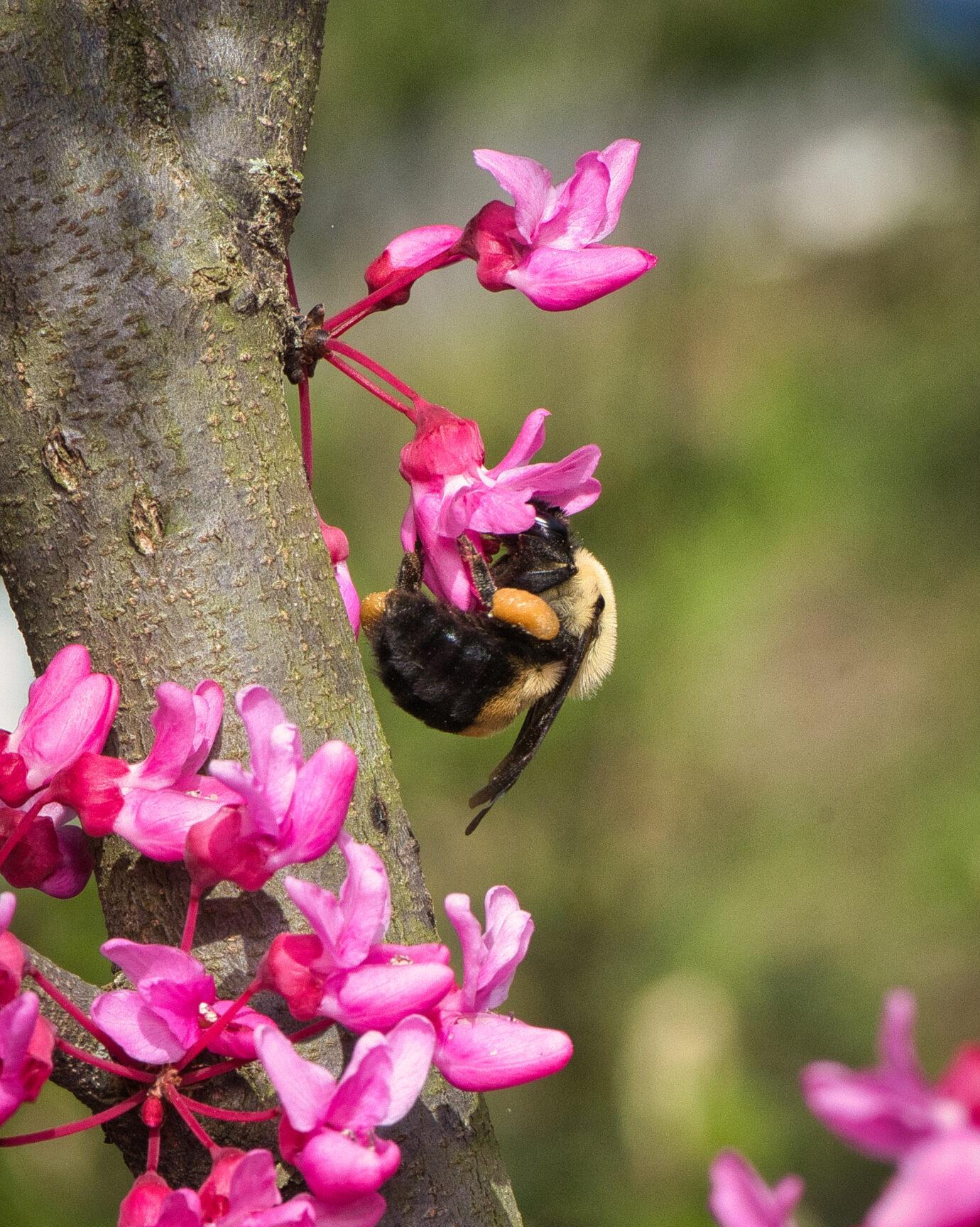
- The flowers are pollinated by native southeastern blueberry and carpenter bees. These bees have the long tongues necessary to reach the nectaries. Short-tongued bees, such as furrow bees and mining bees, can’t do that.
- Redbuds also attract birds, hummingbirds and butterflies – a perfect adornment for any garden.
- The genus name (Cercis) comes from the Greek word kerkis meaning “weaver’s shuttle.”
Anthony D. Fredericks (anthonydfredericks.com) is the author of The Healing Wisdom of the Forest. He lives in York, PA.
next post


Sssensational Snakes of PA
February 24, 2026
By Tianna Godsey, events coordinator A remarkable 51 percent of Americans report a fear of snakes—known as ophidiophobia—even though most species native to Pennsylvania are […]
continue reading