


Beavers: North America’s Largest Rodent
April 13, 2026
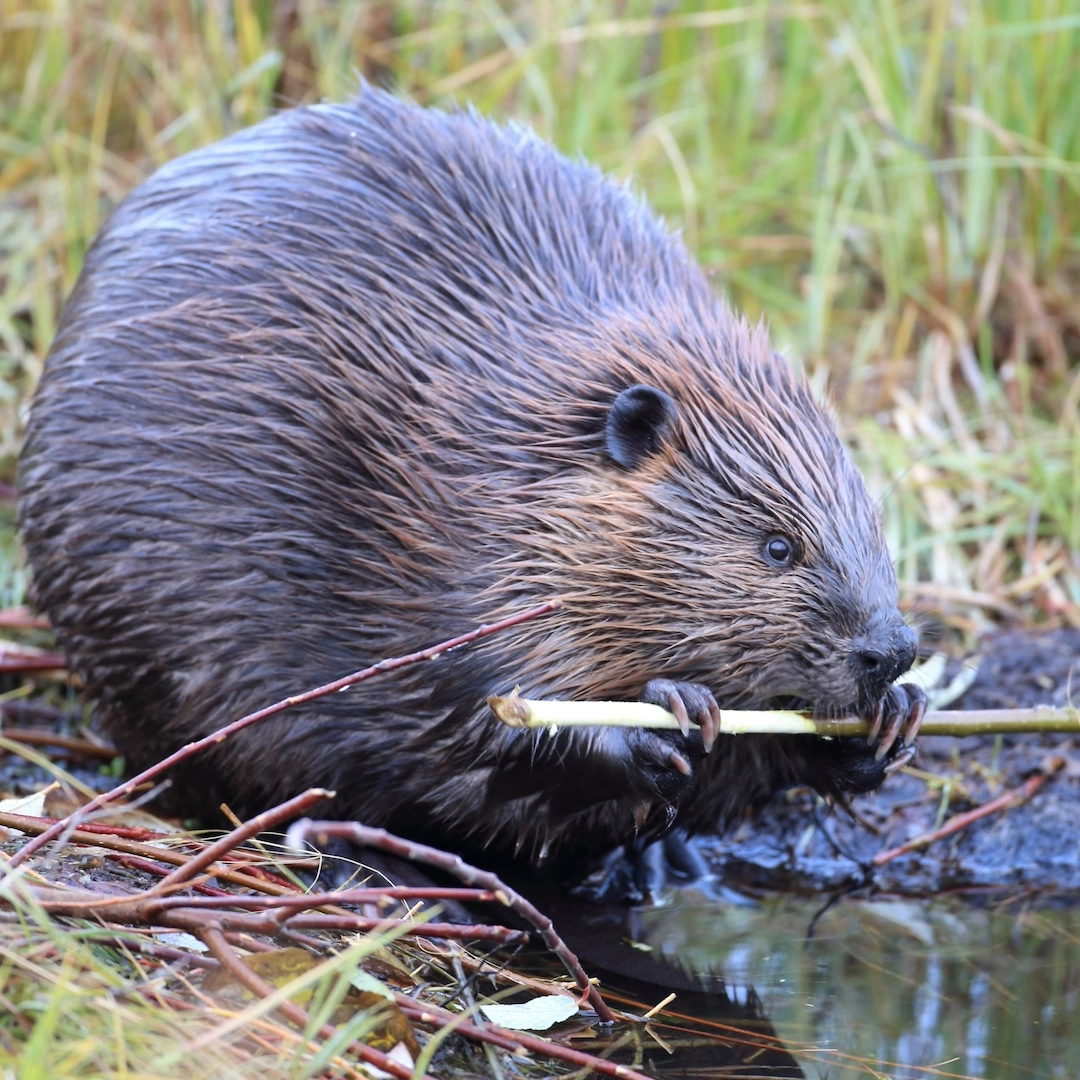

A beaver gnawing on a stick
By Tianna Godsey, Natural Lands Events Coordinator
Reporting back after a fun, though chilly, event hosted with our partners in the Schuylkill Highlands Conservation network, French Creek State Park at Hopewell Lake, our Beneficial Beavers: Learning through Art event which was hosted on International Beaver Day.
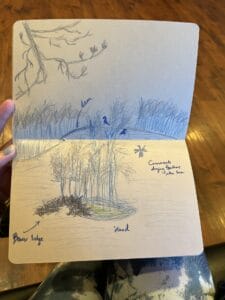
image by Tianna Godsey
The event was from 5:00 – 7:00 PM, planned perfectly to catch the twilight hour when the beavers emerged from their lodge. The park rangers/educators, Margaret and Liam, took our group on a couple of shifts to walk over to the beaver dam, which stretched across a far side of the lake. On the walk over, we happened to see a second beaver lodge, which is an indication that one of the kits has moved out and started building their own home. Beaver lodges are built by a pair/couple (they mate for life), and you’ll see smaller lodges appear on the edges of the lake when kits “move out” at about 2-3 years old. Kits can swim at day one.
Beavers use dams to control flowing water. When beaver dams break down, the nutrients break down into the surrounding soil and create seeds in the bank, which essentially creates a “beaver meadow.” Their diet is fully woody materials. Instead of hibernating during the winter, they will stockpile food and supplies in their lodge and plan to stay there for the duration.
One of the essential ecosystem engineers, the presence of beavers has been known to change an entire ecosystem (trophic cascade), as seen in Yellowstone National Park with the reintroduction of wolves. When beavers returned to the streams of Yellowstone, they created an entirely new wetland ecosystem. Their teeth are extremely strong for chewing through trees and yellow because they have iron-enriched enamel.
It’s fascinating to see a beaver when chewing down a tree; they will rely on their hearing as a source of knowing when the tree is about to fall. All around, North America’s largest rodent is truly fascinating.
Our group was lucky enough to wait long enough to see four beavers crossing the lake once the twilight hit. Geese are also currently breaking off into pairs, so there was a lot of goose drama ensuing around the lake. Also really cool to see a bunch of cormorants gathering in a tree to dry their wings/feathers. They were very active, a group of about 20 all hanging out in one tree on the island where the main beaver lodge sat.
next post


<em>Natural Lands Magazine</em> – Fall/Winter 2025
April 8, 2026
Check out the latest issue of our magazine.
continue reading