White Oak: A Long-Lived Hardwood
November 24, 2026
This article is from the naturalists and conservation professionals at Natural Lands, the Greater Philadelphia region’s oldest and largest land conservation organization, working to protect open space and connect people to nature since 1953.
by Anthony D. Fredericks, guest blogger
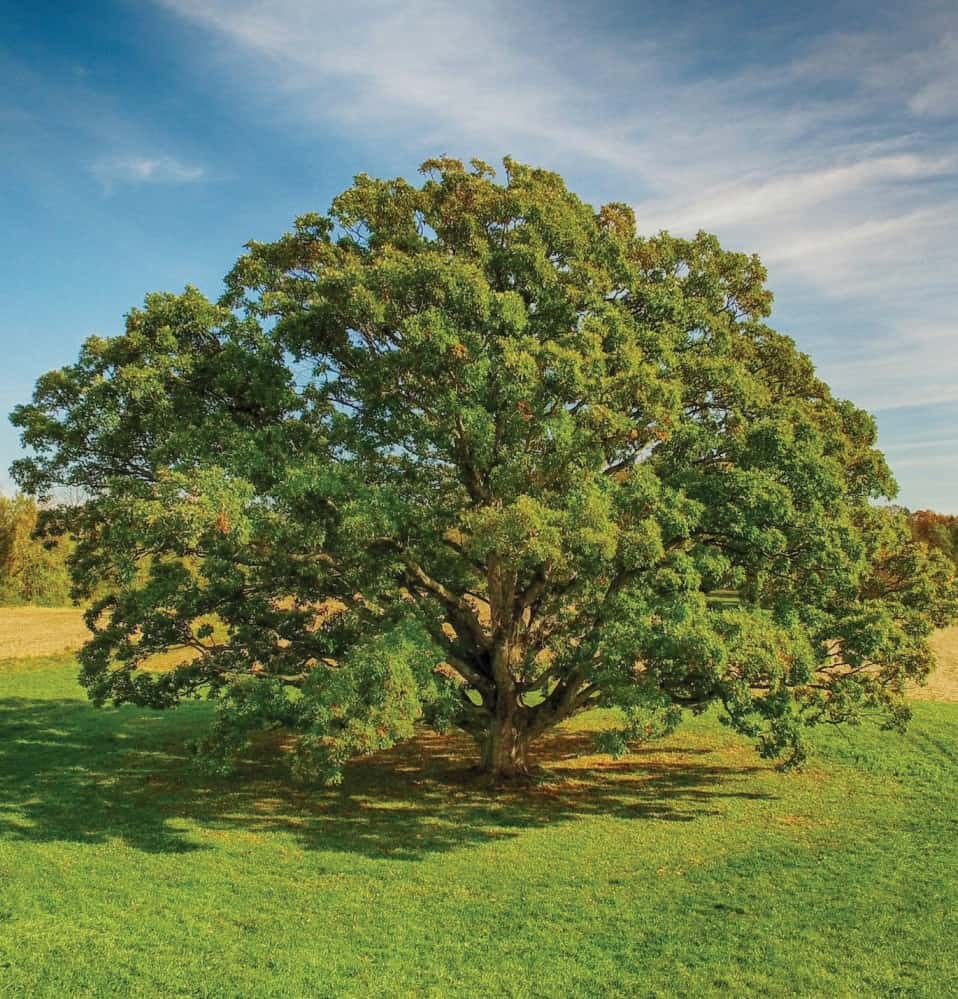
White oaks (Quercus alba) are extant throughout eastern and central North America. As such, they also populate every Natural Lands preserve and are one of the region’s most important wildlife trees. The species name comes from the pale color of its heartwood and its light ash-gray bark. White oaks are famously distinguished as massive trees with large branches jutting out in several different directions. It is not unusual for the crown spread of a white oak tree to be as wide as it is tall. In addition to their overall size, they exhibit several other interesting features. Let’s take a look.
- In the early years of this country’s history, white oak timber was used for shipbuilding, furniture, fenceposts, railroad ties, flooring, and construction. It was prized for its strength and durability, making it a valuable resource during America’s industrial development.
- White oak acorns contain considerably less tannin than acorns from many red oak species (which include northern red oak, southern red oak, scarlet oak, willow oak, pin oak, and black oak). This makes them more palatable and helps explain why they were prized by Native American communities. The acorns were processed, ground into meal, and used in a variety of foods.
- White oak wood is particularly valuable because it is strong, durable, and relatively impermeable to liquids. Thus, the wood is used to manufacture whiskey barrels and wine casks. The wood contributes compounds that significantly influence the flavor, aroma, and color of aging beverages.
- White oaks grow slowly, particularly when young. However, their seedlings can survive beneath a forest canopy for decades, waiting for an opportunity when additional sunlight becomes available. When the canopy opens, they can respond with renewed growth.
Mature white oaks commonly reach heights of 60 to 100 feet. Under especially favorable conditions, individual trees have been documented to be 150 feet tall. The tallest known white oak—the Mingo Oak in West Virginia—reached a height of more than 200 feet before it was felled in 1938. - White oaks survive for long decades, most living for 200-300 years. The Basking Ridge white oak in New Jersey was estimated to have been more than 600 years old when it died in 2016.
- White oaks can produce thousands of acorns in a single year, making them remarkably productive. However, the acorns lose their ability to germinate relatively quickly if allowed to dry out. Nevertheless, they frequently germinate soon after falling, sometimes while still in an autumn environment. One documented tree produced more than 23,000 acorns in a single year.
-
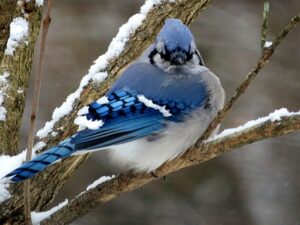
White oak acorns are an important food source for wildlife, including Blue Jays. Photo by Carole Mebus
White oak acorns also provide food for a wide variety of animals including squirrels, deer, wild turkeys, blue jays, woodpeckers, raccoons, mice, chipmunks, and black bears. The USDA reports that more than 180 kinds of birds and mammals consume white oak acorns.
- Quite often, white oaks develop natural root grafts with nearby trees. These connections occur when roots physically join, creating underground relationships between individual trees.
- In fall, white oaks don’t always turn the familiar bright orange and yellow associated with the season. Quite often, they develop rich shades of deep red, purplish-red, and violet. Some trees even retain their dried leaves well into winter.
- White oaks are ecological havens. Their branches offer nesting and perching locations for birds, their trunks provide denning opportunities for wildlife, and their foliage and twigs supply food and nesting materials. In addition, they also store carbon, filter air and water, and help sustain biodiversity.
Anthony D. Fredericks is the best-selling author of The Healing Wisdom of the Forest: Timeless Lessons of Renewal, Tranquility and Joy (https://link.amazon/B0fKqdiqV) and In Search of the Old Ones: An Odyssey among Ancient Trees (https://link.amazon/B0i4ZAWv5). He lives in York, PA.
Explore the Natural World with Natural Lands
Since 1953, Natural Lands has worked to save open space, care for nature, and connect people to the outdoors. As the Greater Philadelphia region’s oldest and largest land conservation organization, Natural Lands has preserved 140,000 acres, including a network of 40+ nature preserves and one public garden totaling 24,000 acres. Today, 5 million people live within five miles of land under Natural Lands’ permanent protection.
Get outside and explore.
Natural Lands’ nature preserves are free and open to the public, with more than 120 miles of trails to discover. Looking for a place to start? Visit a Natural Lands preserve or explore Stoneleigh: a natural garden, open Tuesday through Sunday from 10 AM to 5 PM, with free admission.
Keep nature thriving.
Natural Lands is a member-supported nonprofit, and your support helps protect important landscapes, care for wildlife habitat, and keep natural spaces accessible. Become a member or make a gift.
next post
A Giant of Conservation Retires
November 23, 2026
By Daniel Barringer, Preserve Manager. Jack Stefferud recently retired from Natural Lands. He’s well known in the region for his very successful efforts to save […]
continue reading