Print this page

Blog

Mariton: Birding at Jacobsburg

by Tim Burris, Preserve Manager.  Photos by Carole Mebus.

MEBUS MaritonBirdersEndOfTheWalk0521   

Our morning bird walk at Jacobsburg State Park started with fog, and ended up with sunshine and steam.  We had a great morning of birding.  There were lots of Indigo Buntings.  When the sun broke out their blue was breath taking. 

MEBUS BlueWingedWarblerJacobsburgSP0521-Notsinging

Blue-winged Warbler

Blue-winged warblers were also very vocal, but it is sometimes hard to find them.  We had one male cooperate and sing from the end of a dead tree.  It was pretty far away, but it stayed there for quite awhile and everyone got to watch it singing.  I think watching a bird sing, is a good way to imprint the call on your mind.    

A Common Yellowthroat had everyone’s attention as it flitted in a tangle.  There was also a White-eyed Vireo nearby which I searched for without success.

MEBUS GreatCrestedFlycatcherJacobsburgSP0521

Great-crested Flycatcher

A Great Crested Flycather was pretty cooperative.  I like this photo because it shows all the feeler feathers around the beak that help the flycatcher catch its prey while in flight.

We also saw lots of Baltimore Orioles, and a couple Scarlet Tanagers.

MEBUS EasternTowheeJacobsburgSP0521

This Eastern Towhee looks pretty happy.  This species used to be called Rufous-sided Towhee.  I understand the need to change names as we learn more about species, especially with advances in DNA testing, but Rufous-sided was so descriptive.

We got lucky with the weather once again.  Next week we end our birding series at Lake Nockamixon State Park.

Saunders Woods: Lending a Hand

By Paul Claypoole, Preserve Manager

Spring has sprung, and with the arrival of fresh vegetation around the preserve, the interior of the community center in the lower barn at Saunders Woods Preserve received a fresh coat of paint.

Peter Grove, who has served on the board of Friends of Saunders Woods for the past two years, said at our last board meeting that he would like to freshen up the lower barn area as a volunteer project. The Board had been talking about having this job done but funds hadn’t been available, so we unanimously accepted Peter’s offer.

The Finished ProductSaunders Woods int. kitchen 1

When NLT accepted Dorothy Saunders’ donation of Saunders Woods, which was previously known as “Little Farm”, in 1988, we inherited the Saunders’ legacy of hospitality, particularly within the barn, which has housed local college students, horses, bike riders, and foreign exchange students over the decades. It is a legacy that we carry on with enthusiasm, and to that end, we have been offering the barn’s amenities—a full kitchen, bathrooms, and indoor/outdoor meeting and eating spaces—to community groups, for a nominal fee.

 The painting needed to be done when it was not freezing cold, since the barn is unheated, and before rentals started, so there was a tight schedule. Working with Steve Longenecker (Regional Building Supervisor) on scheduling and picking up supplies, Peter and his wife, Nancy, began painting in the last week of April and completed the project in the first week of May.

 The community center in the barn, which dates to the 1800s, now looks brand new. A big thank you to Peter and Nancy for their interest in making sure the barn looks its best and their excellent handiwork!


Green Futures Workshop – registration deadline tomorrow!

If you haven’t already registered for the Green Futures: Green Solutions to Stormwater Management— you still have a little time.

It’s a workshop about successful stormwater management projects that use natural solutions. Designed for municipal officials, facilities managers, and members of township Environmental Advisory Councils, the program will include case studies, ordinance language, and how to maintain natural infrastructure (the latter sounds like an oxymoron—but isn’t). Several presentations will be by Natural Lands Trust staff, including yours truly.

Oh, and it includes dinner, and is free. The event is next Thursday, May 30 from  5 – 9 pm and will be held at Montgomery County Community College – West Campus in Pottstown. The registration deadline has been extended to May 22. Check the link above.

Posted by Daniel Barringer on May 21, 2013.

New Jersey: A Time for Warblers

By Brian Johnson, Preserve Manager, and Ariel Senko. Photos by Brian Johnson.

Prothonotary Warbler       Black-and-White Warbler              Prairie Warbler        

This past month, our southern New Jersey preserves have been full of warblers, which are a treat to see in their magnificent breeding plumage. Brian Johnson, New Jersey preserve manager, says that 16 warbler species breed on our southern Jersey preserves and up to 35 species pass through in May, though a few years can pass between sightings of some of the species. The peak season is just about over, but the 16 species that breed on our preserves may be spotted well into the summer.

 Neo-tropical migrants, most of the warblers we see in the U.S. winter in Central or Southern America. (Some are satisfied with wintering in southern Florida.)  The three varieties pictured here are the Prothonotary Warbler, the Black and White Warbler, and the Prairie Warbler, respectively. As you may notice, the predominant color among warblers is yellow, though they may also sport blues, oranges, reds, greens, greys, black, and white. All warblers consume insects and spiders; a few species have more diverse diets, and will eat berries, seeds, and nuts.

Most warbler species prefer to spend their time high in the trees (the better to catch flying bugs), so experienced birders will often rely on warblers’ songs to help them identify the birds. There is a reason that the aches that birders sometimes experience from staring up for extended periods of time is called “Warbler Neck”—the warblers are so pretty that birders can’t help themselves!  

The Prothonotary Warbler

Prothonotary Warbler

The Prothonotary Warbler is known as the only cavity-nesting Warbler on the East Coast, preferring old woodpecker holes and hollowed trees. Of the three warbler varieties pictured, only the Prothonotary population entirely leaves the U.S. for the winter. Since so many warblers are yellow, it can be tricky to tell them apart at first, but if you see a yellow bird with a full blue/gray wing on our preserves, you can be sure that it’s a Prothonotary. The only other warblers with so much blue on their wings are, well, Blue-Winged Warblers, which have a black band across their eye and aren’t common on this part of the East Coast.


The Black and White Warbler

Black-and-White Warbler

The Black and White Warbler goes up and down the lengths of tree trunks to hunt for insects on and underneath the bark, much like a Nuthatch or Brown Creeper. These Warblers seem to prefer broadleaf or mixed uplands. Despite spending so much time feeding in trees, Black and Whites prefer to nest on the ground. Their plumage is striking, but their stripes actually help them to blend in with their surroundings, making them easy to miss.


The Prairie Warbler

Prairie Warbler

Prairie Warblers breed in early successional habitats—overgrown fields with sparse, young trees, and prefer to nest in shrubs or trees no more than 10 feet off the ground. Some fun facts about these Warblers—they will sometimes hang upside down on a branch to eat bugs on the undersides of leaves, and are also know to eat the eggshells of their young as soon as the young have hatched.


All three of these Warbler species are rated by the International Union for Conservation of Nature (ICUN) as a species of “Least Concern,” but bird-watching organizations around the country including the National Wildlife Service agree that many Warbler populations, as well as those of many other neo-tropical bird species, are currently declining. Other populations appear to be stable but have concentrated populations, and they may be at risk if those habitats are altered or lost.

Of the three Warblers featured here, the Black-and-White Warbler is doing the best, thanks to its relatively extensive breeding and wintering ranges (from southern Canada through Mexico and Central America into the northwest coast of South America), and the variety of habitats it will tolerate.

Prothonotary Warblers like to live in tree cavities above standing water, which is why they like New Jersey—for the swamps and wetlands. Prothonotaries prefer to nest in larger tracts of forest and are believed to be suffering a loss of habitat due to development and deforestation. The installation of nesting boxes (as substitutes for tree cavities) and efforts to restore bottomland forests along the Mississippi River have led to increased populations in the U.S., but the birds still face loss of habitat in their wintering grounds south of the U.S.

Prairie Warblers, on the other hand, prefer fields with small trees and shrubs. They actually lose habitat as forests naturally mature. The good news is, Natural Lands Trust’s stewardship staff use a stewardship technique that periodically eliminates the young growth of new trees that would result in the gradual loss of the Prairie Warbler’s preferred habitat in certain parts of our preserves—controlled burns. Prairie Warblers, like Prothonotary Warblers, still face loss of habitat in their wintering grounds outside the U.S.

In addition to loss of habitat, many Warblers are also susceptible to pesticides that are used in communities to kill mosquitoes, and parasitism by the Brown-headed Cowbird, which, making no nest of its own, will lay its eggs in Warbler nests. The Cowbird brood, which are usually larger than the Warbler brood, become competition for food from the Warbler parents, and may even remove Warbler eggs and young from the nest. Cowbirds prefer to live in open land near trees, but not in forests, so deforestation has exacerbated the Cowbird parasitism problem. 

The main threat to Warblers, however, continues to be loss of habitat in their wintering grounds. Since Congress passed the Neotropical Migratory Bird Conservation Act (NMBCA) in 2002 in order to promote the long-term conservation of neotropical migratory birds and their habitats, millions of dollars have been raised every year to fund collaborative conservation projects in North, Central and South America. This year, $12.5 million was raised to protect more than 250,000 acres of this critical habitat, including pine-oak forests of Central America, critical bays in Panama and Paraguay, high Andean wetlands, the Ecuadorian Choco.


Diabase Farm Preserve

*click on image to view larger

Paunacussing Preserve


*click on image to view larger

Mariton: Trail Closures

by Tim Burris, Preserve Manager

While the logs from the storm damage are being moved, we will be having trail closures at Mariton.

Presently the Spruce Trail, Kit Trail, and a section of the Main Trail are closed.  Please for respect these closures and stay out of these areas.

Also we will be setting up a temporary parking area near the house.  Large trucks and heavy equipment are coming in and out of the main parking lot and we don’t want to endanger visitor’s vehicles.  I have signs directing people to the alternate parking area.

Thanks for your cooperation, and I am sorry for any inconvenience that this may cause.

Mariton: Merrill Creek Birding

by Tim Burris, Preserve Manager.  Photos by Carole Mebus

We went to Merrill Creek Reservoir on Tuesday.  We had frost in the yard at Mariton, but it warmed up.  I thought the birds would want to get out and start feeding, so I wasn’t concerned about sightings.

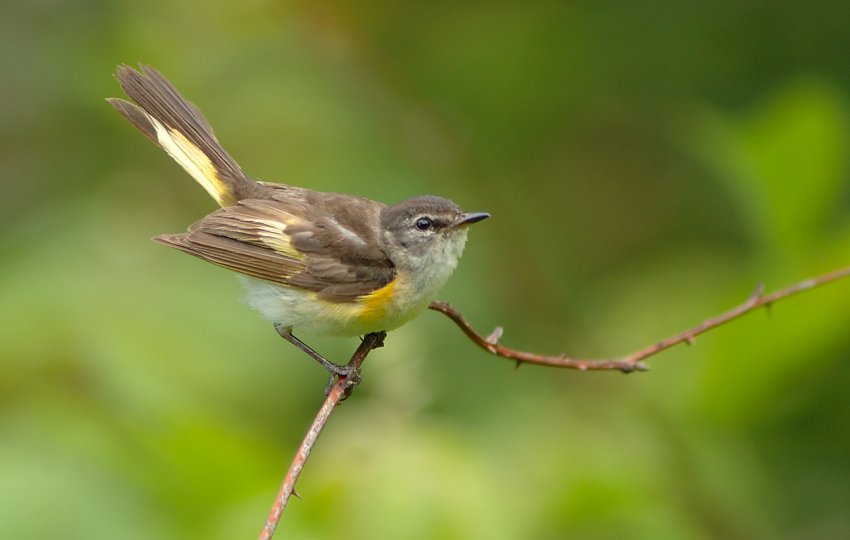
We saw some interesting birds, including an American Redstart that would not stay still for a photo.  We also got a good look at a Veery that wasn’t singing.  We were unable to find a Brown Thrasher that was spotted the day before.

MEBUS EasternTowheeOrchardMerrillCreek0514

Eastern Towhee

MEBUS BaltimoreOrioleInOrchardMerrillCreek0514

Baltimore Orioles were singing most of the time we were in the woods.

Next week we head to Jacobsburg State Park.

Mariton: Migratory Bird Census

by Tim Burris, Preserve Manager

Migratory Bird Census 2013

Mariton held its Migratory Bird Census on Saturday.  During normal years May 12 is very close to the peak of the migration for neo-tropical birds.  It is one reason that the Big Days are scheduled this weekend.  This spring, I think the birds are a little later than usual.  (Last year they were really early.)  For me this has been a wonderful spring.  The flowers have been glorious and have stayed in bloom for extended periods.  I am thinking that the bird migration might be similar, and we will be able to enjoy these migrants as they extend their visit to our area.

MEBUS OvenbirdSingingSqueezeTrailMaritonMigrationCount0511

Jubilant Ovenbird.  Photo by Carole Mebus.

Our count was very successful.  We counted 48 species and 254 individuals.  Ovenbirds were the most abundant.  We counted 24, and heard them everywhere we walked.  An immature Bald Eagle passing over was a pleasant surprise.  Mariton is also in the flight path of Great Blue Herons.  So, even though we don’t have water on the preserve, we counted 7 flying over. 

The weather forecast was iffy at best.  I got up at 5:30 a.m. to fret about the weather as usual.  I analyzed the forecasts from several stations, as well as the radar loops.  I figured that we would be okay until 10:30 or 11:00 a.m. before the rain moved in.  So, I sent out an email that the census was on.  I shouldn’t worry so much; it was a good hour after everyone had left before we saw the first raindrops here.

Crow’s Nest: Flowers in the Deep Woods


Dwarf ginseng (Panax trifolius) is now blooming in the Deep Woods, as well as spring cress (Cardamine bulbosa).

But here’s another one, a plant that I have never noticed here before. The kids at WebWalkers found it and pointed it out to me. It is bishop’s cap, Mitella diphylla.

IMG_1206

Here’s a closeup of the flowers which, though tiny, are spectacular:

IMG_1198 (1)

Posted by Daniel Barringer on May 11, 2013.

Archives